Introduction
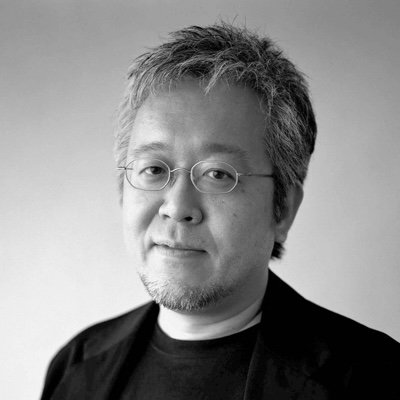
In this episode, we invited both our host, design theorist John Maeda, and Japanese graphic designer Kenya Hara to share their thinking about simplicity.
Simplicity is often understood as reducing things, but John Maeda thinks it is more complicated than that. He talks about a common problem in design: “On the one hand, you want a product or service to be easy to use; on the other hand you want it to do everything that a person might want it to do.”¹ For Maeda, simplicity is not only about function, but also about feeling. A good design should not only work well, but also make people feel something, even something small. So simplicity is not empty.
When it comes to simplicity feeling, Kenya Hara gives another way to think about it through MUJI which is a representative lifestyle and design philosophy on worldwide. He writes, “MUJI's perspective is unique; in the MUJI concept, design intervenes in the making of things.”² This is different from a world that is driven by money and consumption. MUJI shows another kind of aesthetic. Hara thinks Japanese design focuses on simplicity, not as something missing, but as a kind of quiet beauty.²
Together, these ideas show that simplicity is not just about how things look. They also explore how minimalism has shaped design theory. What does “form follows function” really mean?
Footnotes
¹ John Maeda, The Laws of Simplicity (Cambridge, MA: MIT Press, 2006).
² Kenya Hara, MUJI: Nothing Yet Everything (Baden: Lars Müller Publishers, 2009).